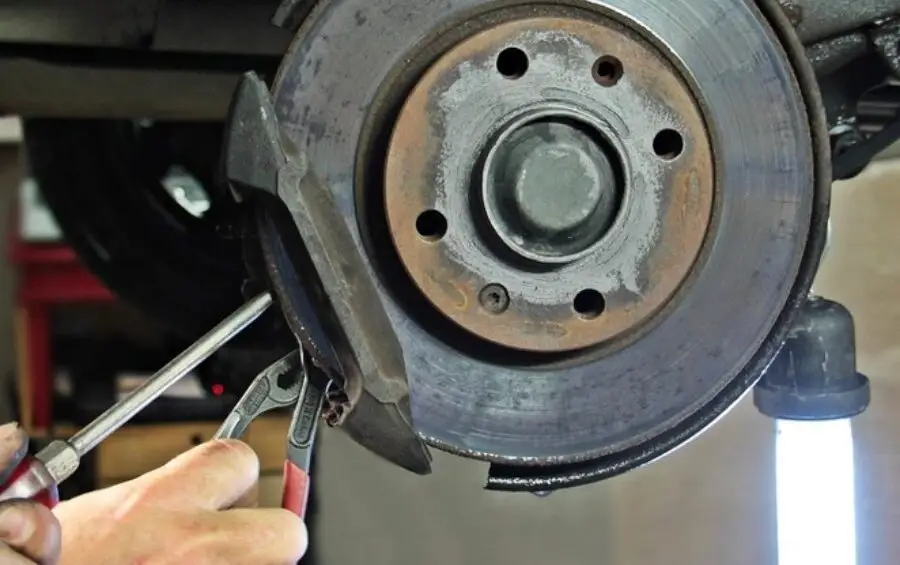
Brakes are the most important safety system on your vehicle. If you are unsure about any brake work, have a qualified technician do it.
Warning signs
- High-pitched squeal when braking – many pads have a wear indicator that does this on purpose
- Grinding – the pad material may be gone; stop driving and inspect
- Vibration or pulsing in the pedal or steering wheel
- A soft or low pedal, or the car pulling to one side
- Brake warning light
Choosing pads
- Ceramic – quiet, low dust, smooth; a popular choice for daily driving.
- Semi-metallic – strong bite and heat handling for towing, trucks and heavier use; can be noisier with more dust.
- Organic – soft and quiet on lighter vehicles.
Rotors
Rotors wear too. They are replaced (or machined, where allowed) when they are below the minimum thickness stamped on them, badly scored, or warped enough to cause vibration. Replace pads and rotors in axle pairs – both fronts or both rears together.
Brake fluid
Brake fluid absorbs moisture over time. Use the DOT type printed on your reservoir cap (DOT 3, DOT 4 or DOT 5.1 are common – don’t mix with silicone DOT 5 unless specified) and follow your maintenance schedule for flushes.
After new pads
Pump the pedal before driving off, and bed in new pads as the manufacturer describes. Parts lookup: call the parts counter at (909) 623-3151.